
Savannah Veterinary Internal Medicine, November 30, 2025
You have likely seen the recent headlines: there is a national recall on ByHeart Whole Nutrition Infant Formula due to a botulism outbreak. As of late November 2025, the CDC has confirmed 37 cases of infants hospitalized across 17 states.
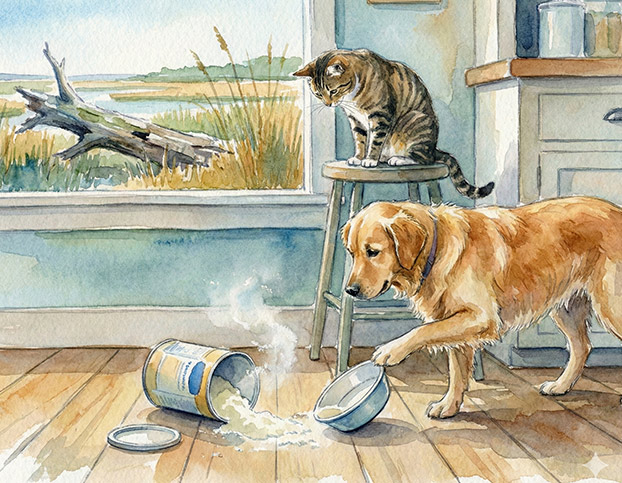
While this is frightening news for parents, it has also raised concern among pet owners here in Coastal Georgia and Bluffton, SC. If you have recalled formula in your pantry, you might be asking: “If my dog or cat accidentally ate some of this powder, will they get sick?“
As specialists in veterinary internal medicine, we want to clear up the confusion. In this blog we explain the local risks, why cats and dogs react differently than humans, and what you need to watch for.
The Current Status: What You Need to Know
Before we dive into the veterinary side, here are the facts about the human outbreak as of late November 2025:
- Is Georgia Affected? Currently, there are no confirmed cases of infant botulism linked to this formula in Georgia. However, cases have been confirmed in 17 states, including our neighbor North Carolina.
- Why the Risk Remains: Even though we haven’t seen cases locally, this formula was sold nationwide at major retailers, as well as online. This means Savannah residents may still have this contaminated product in their homes.
- The Recall: ByHeart has voluntarily recalled all batches of their Whole Nutrition Infant Formula (cans and packets) out of an abundance of caution due to the presence of spores.
The Science: “Seeds” vs. “Poison”
To understand if your pet is safe, we have to look at the difference between spores (the seeds) and toxins (the poison).
- Infant Botulism (The Human Risk): Human babies have immature digestive systems. If they swallow the bacterial spores (the seeds) in the formula, those seeds can “hatch” inside the baby’s intestines and release the toxin.
- The Pet Advantage: Dogs and cats—even puppies and kittens—are naturally much tougher. Their stomachs are highly acidic. If a healthy pet eats the dry formula powder containing the spores (seeds), their body is generally able to destroy the seeds or pass them through without the toxin hatching.
The Bottom Line: The risk of your pet getting sick from eating dry formula powder is very low since it contains the spores. The One Exception— If you mixed the formula with water and left it out on the counter for days (allowing it to spoil), the spores could hatch and produce the toxin. Eating that spoiled mixture could be dangerous.
The Real Threat: Botulism in Savannah and Pooler
While the baby formula is low-risk, botulism is a threat in Savannah because of our environment. Our warm, coastal climate is perfect for these bacteria to thrive in the sediment of stagnant swamps or within decaying wildlife.
However, the risk is not equal for all pets:
- The Danger for Dogs—Dogs are the primary victims because of their scavenging habits. The biggest risk in our area is a dog getting into roadkill, finding a decaying carcass in the woods, or eating spoiled food from an overturned trash can. The toxin has already hatched in these things.
- A Special Note on Cats—Studies show that cats are highly resistant to botulism—much more so than dogs. It is extremely rare for a cat to develop this disease. However, “rare” does not mean “impossible.”
- Indoor Cats: Are at almost zero risk unless they eat spoiled, raw meat left on a counter where the toxin has hatched
- Outdoor Cats: Are at higher risk if they hunt and consume dead birds or roadkill—again, these incubate and hatch the toxin.
Symptoms: What to Watch For
If your pet has eaten dead wildlife or rotting food, watch for these symptoms. They usually start 12 to 72 hours after exposure:
Weakness Starting in the Back: Unlike other spinal issues, botulism usually starts as weakness in the rear legs and moves forward toward the front legs and neck.
Face and Eye Changes: You might notice drooling, a dropped jaw, or trouble swallowing. A key warning sign is pupils that seem very large (dilated) and do not shrink when you shine a light on them.
Voice Changes: In dogs, the bark may change or disappear. In cats, you may notice a weak or silent meow.
Dry Eyes: Because they cannot blink properly, their eyes may look dry, red, or “gummy.”
The Key Clue: A pet with botulism is usually mentally wide awake. They know who you are, they are alert, and they can feel pain—they just cannot move their body.
Diagnosis and Treatment: Savannah Veterinary Internal Medicine’s View
Diagnosing botulism is tricky. Routine blood tests usually are normal. As Internal Medicine Specialists, we often diagnose it by “ruling out” other causes of paralysis, such as tick bites or immune system disorders. Informing your veterinarian of all things your pet may have eaten is extremely helpful to understanding your pet’s symptoms
Treatment focuses on supportive care to keep the pet alive while their nerves heal. Recovery typically takes 14 to 24 days.
- Nursing Care: Since they cannot move, we must turn them frequently on soft bedding to prevent bedsores.
- Bladder Care: Many pets lose the ability to empty their bladder. We monitor this closely and express the bladder manually to prevent it from overflowing.
- Feeding & Breathing: If they can’t swallow or breathe well, we may utilize feeding tubes or a breathing ventilator.
IMPORTANT NOTE ON MEDICATIONS:
If you suspect botulism and visit an emergency clinic, be aware that certain antibiotics can make the paralysis worse. Antibiotics like Clindamycin or Gentamicin should generally be avoided if botulism is suspected, as they can further block the connection between the nerves and muscles. Always ensure your veterinarian knows if your pet has eaten raw meat or dead animals.What Should You Do?
If your dog ate some of the recalled dry baby formula, don’t panic. They are likely safe.
However, if your pet has been into the trash or eating dead wildlife, and you notice them becoming weak, unable to blink, or having trouble walking, that is a medical emergency.
Next Step: If you see progressive weakness in your pet’s legs or changes in their ability to swallow, please contact your primary care veterinarian or Savannah Veterinary Internal Medicine. We can help guide you through the diagnosis and care plan to get your furry Savannah companion on their feet again.
Author:
James Woods DVM, MS, DACVIM (SAIM)
Ph: (912) 721-6410
Contact Us