
Veterinary Internal Medicine for Savannah, Pooler, and Hardeeville
In veterinary internal medicine, there is an “Alphabet Soup” of viral diseases that strikes fear into the hearts of cat owners throughout Savannah and the Lowcountry: FeLV, FIV, and FIP.
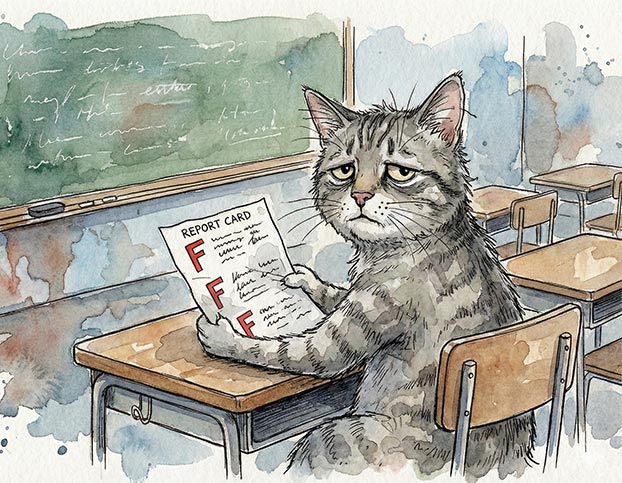
Because they all start with “F” and are serious viral infections, they are often confused. However, these are three distinct enemies. They have different ways of spreading, different testing protocols, and vastly different prognoses.
If you are a pet owner in Savannah, Coastal Georgia, or Bluffton, SC, and your cat is facing one of the “Big Three,” you need to know exactly which battle you are fighting.
Here is the Internist’s guide to distinguishing the “Friendly,” the “Fighter,” and the “Mutant”—and how we think about them at Savannah Veterinary Internal Medicine.
1. FeLV: Feline Leukemia Virus (The “Friendly” Cat Disease)
Of the three viruses, this is the one most commonly seen in the Coastal Georgia outdoor cat population.
The Virology: FeLV acts as a genetic hijacker. It inserts its own viral ‘blueprint’ directly into the cat’s DNA, effectively taking over the machinery that produces blood cells.
The Transmission: This is the “Friendly Cat Disease” because it spreads through prolonged close “friendly” contact. It is transmitted via saliva during mutual grooming, sharing water bowls, and nursing.
The Damage: It attacks the bone marrow factory. This leads to anemia (not making enough blood), lymphoma (cancer), and a weak immune system.
The Specialist’s Note: As we discussed in our deep dive on FeLV testing, this is the only one of the three where the outcome is determined by the cat’s immune response efficiency. Some cats fight it off (“Abortive”), some become silent carriers (“Regressive”), and some get sick (“Progressive”).
The Prognosis: Guarded (risky) for active infections, but manageable for carriers with the right indoor care.
Because we have a large community cat population in our region, any cat allowed outdoors in Savannah or Pooler is at high risk. Vaccination and keeping cats indoors are your best defenses.
A cat with FIV can safely live with FIV-negative cats as long as there is no aggression. As for “play fighting,” while it is theoretically possible to transmit FIV during rambunctious play, the biting must be hard enough to break the skin and draw blood.
2. FIV: Feline Immunodeficiency Virus (The “Fighter” Cat Disease)
While FeLV is about “friends,” FIV is about “fighters.” This is a common diagnosis for intact male cats found in Hinesville, Statesboro and the surrounding rural areas.
The Virology: This is similar to HIV in humans. It moves slowly and stays with the cat for life.
The Transmission: This is often called the “Fighting Cat Disease.” It is rarely spread by grooming or sharing bowls; instead, it requires a deep bite wound to inject the virus directly into another cat. This is why we see it most often in tomcats with a history of fighting over territory or mates.
The Damage: FIV targets the immune system’s “generals”—the T-cells. Over many years, it slowly depletes the body’s defenses, much like a draining battery. Eventually, this leaves the cat vulnerable to everyday infections that a healthy immune system would easily shake off.
The Specialist’s Note: FIV is not a death sentence. Many FIV+ cats live normal, happy lifespans. The danger isn’t the virus itself, but the secondary infections (such as severe gum disease, upper respiratory viruses, and parasitic infections) that slip past their defenses.
The Prognosis: Generally good. With strict indoor management and prompt treatment of any minor illness, these cats can be wonderful companions.
3. FIP: Feline Infectious Peritonitis (The “Mutant”)
This is the diagnosis that causes the most confusion. Until recently, it was considered fatal, but new treatments are changing the story.
The Virology: FIV is a mutated Feline Coronavirus (not the same virus as COVID-19).
The Transmission: This is the most misunderstood trait. FIP itself is not directly contagious.
Most cats catch the harmless “intestinal coronavirus” (mild diarrhea) from a litter box.
In about 5-10% of cats, the virus spontaneously mutates (changes form) inside their body. It gains the ability to leave the gut and attack the rest of the body.
The Damage: It causes Vasculitis (severe inflammation of the blood vessels). This causes fluid to leak into the chest or abdomen (“Wet” FIP) or hard lumps called granulomas to form on internal organs (“Dry” FIP).
The Specialist’s Note: Historically, this disease was 100% fatal. Today, with novel antivirals, we are seeing actual cures. Diagnosing FIP requires advanced work—often involving bodily fluid analysis and/or biopsy for diagnosis.
FIP is not something other cats can catch. Cats with FIP can safely live with cats without FIP. It is not necessary to quarantine or separate positive and negative housemates.
Today, FIP is no longer a death sentence. Thanks to revolutionary new antivirals, this disease is now treatable and often curable.
Comparison: The “Triple F” Cheat Sheet | |||
Feature | FeLV | FIV | FIP |
Virus Type | Inserts into cat’s DNA | Slow acting | Mutated Coronavirus |
Nickname | “Friendly Cat” Disease | “Fighting Cat” Disease | “The Mutant” |
Transmission | Saliva (Grooming/Bowls) | Blood/Saliva (Bites) | Not Contagious |
Primary Target | Bone Marrow | Immune System | Blood Vessels |
Key Test | Antigen (SNAP) +/- Quantitative PCR | Antibody (SNAP ELISA) | Fluid Analysis / Biopsy |
Why Accurate Diagnosis Matters for Coastal Georgia Pets
Treating an FIV cat like an FIP cat can be a disaster. Each of these “F-Words” requires a completely different medical approach:
• FIV needs immune support, dental care, and patience.
• FeLV needs bone marrow monitoring and separation from other cats.
• FIP needs immediate, emergency diagnostic confirmation and discussion of antiviral therapy.
If your cat has tested positive for one of these viruses, do not rely on a generic prognosis.
Partner with the Experts in Hardeeville, Pooler, and Savannah
At Savannah Veterinary Internal Medicine, we specialize in untangling these complex viral cases. Whether you are in downtown Savannah or driving in from Hardeeville, SC, we are here to provide the testing needed to get the right answer.
Request a Referral or Consultation Today. Serving Savannah, Pooler, Richmond Hill, and the South Carolina Lowcountry
Author:
James Woods DVM, MS, DACVIM (SAIM)
Ph: (912) 721-6410
Contact Us